
Smartwatches have already become an inseparable part of the contemporary world. Tracing the steps and monitoring sleep are only some of the features of these gadgets, and besides delivering heart rate information and even ECG, these devices now can be described as health companions. However, as their popularity increases, the question arises among many people: are smart watches safe for your health? Also, the question arises frequently, does a smart watch measure blood pressure accurately? This article gives a detailed evidence-based explanation of how to safely use a smartwatch, how well it can measure health and others, and the tips to use in order to do it.
Table of Contents
How Smartwatches Measure Health Data
Sensors Behind the Technology
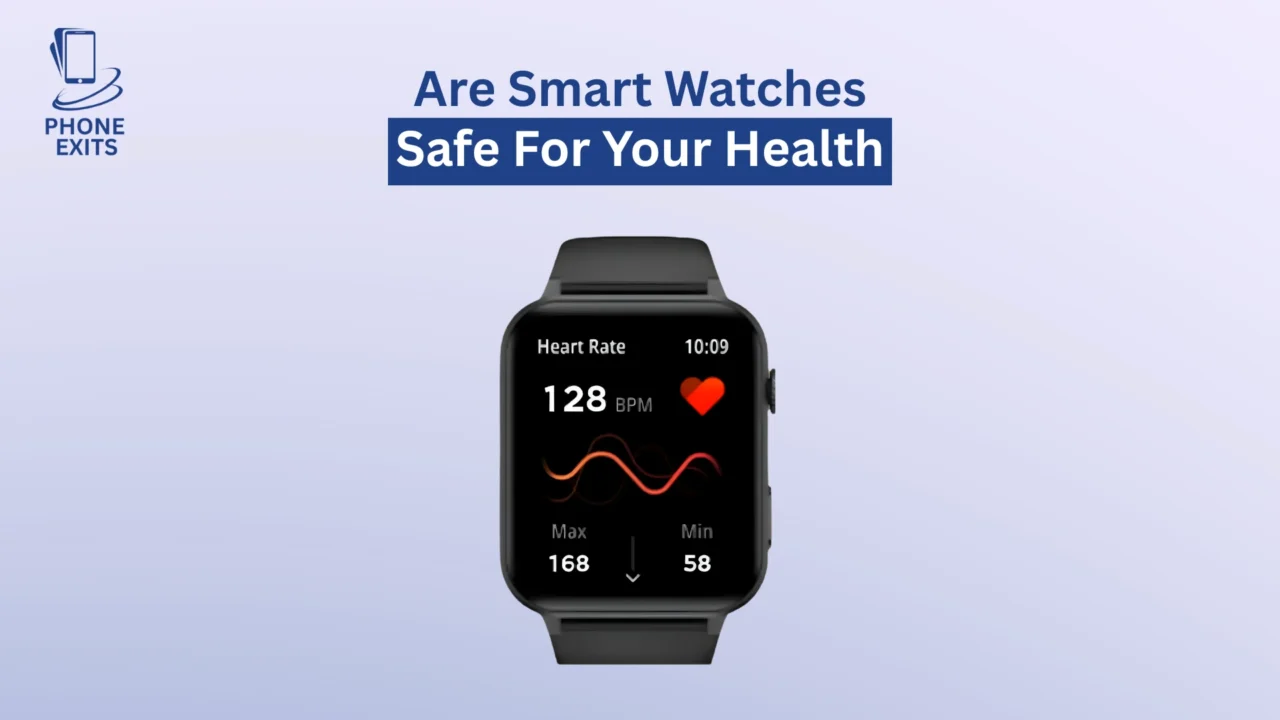
Smartwatches depend on numerous sensors to gather health-related data. Photoplethysmography (PPG) optical sensors are sensors that illuminate the skin and measure the blood flow to estimate the heart rate. Certain premium models also offer single-lead ECG sensors, which are able to detect heart rhythm when the user touches the watch crown or the electrode. Movement, steps and posture are being followed using accelerometers and gyroscopes, and blood oxygen is also being monitored using SpO2. There are other state-of-the-art sensors that can track the skin temperature, the atmosphere or even sleep patterns.
Turning Data Into Insights
These sensors retrieve raw signals which are then converted into complex algorithms. Measuring heart rate is done by identifying peaks in blood flow, and measuring irregular rhythms through ECG algorithms. Sleep monitoring involves the utilization of body movement and heart rate measurements to determine sleep patterns. These readings are helpful in terms of trends and awareness, but it should be noted that it is more of an estimation and not a diagnostic tool. Accuracy can be impacted by factors like skin tone, device fit, motion, and ambient light, among other factors.
Are Smartwatches Safe? Understanding Risks
Radiofrequency Exposure
The possible impact of radiofrequency (RF) radiation is one of the common concerns. The Centers of Disease Control and Prevention (CDC) state that smartwatches produce extremely low non-ionizing radiation with Bluetooth or Wi-Fi. Such emissions are way below the safety thresholds required by regulatory agencies such as the Federal Communications Commission (FCC). The existing scientific data show that RF exposure to a smartwatch is small and harmless to the majority of the users.
Materials and Chemicals in Watch Bands
A more contemporary issue is that smartwatch bands contain chemicals. Research has discovered that commercial watch bands are contaminated with some per- and polyfluoroalkyl (PFAS) substances, also known as forever chemicals. These compounds are intractable in the environment and can be dangerous to health with prolonged exposure. Although the amount absorbed through the skin with a wristband is probably low, users concerned can use silicone or hypoallergenic bands.
Skin Irritation and Device Safety
Another practical consideration is skin irritation. Sweat or friction or even metal content in the watch casing such as nickel may be red or uncomfortable. In rare cases, safety risks may arise due to battery or charging problems but the safety standards of the modern devices are high. To avoid irritation one should wear the watch tight, but never too tight, clean the strap frequently, and on a different wrist when possible.
Accuracy of Smartwatch Health Metrics
Heart Rate, Sleep, and Activity Tracking
Smartwatches give fair approximations of the heart rate, steps, and sleep duration. Despite these measures being accurate in general in tracing trends, they can be less accurate when intense exercise is involved or irregular heartbeats are present. These readings are meant to be an overall wellness guide as opposed to a clinical indication to users.
ECG and Arrhythmia Detection
Other smartwatches include an ECG sensor, which can identify irregular heart rhythms such as atrial fibrillation. These features can be FDA-cleared to be used as a screening tool. Nevertheless, they are not to substitute professional medical assessment, and any suspicious outcomes must make a healthcare provider refer to them.
Blood Oxygen and Stress Monitoring
Blood oxygen (SpO 2) measurements offer informative trend data, especially during sleep or altitude measurements, but fail to replace medical grade pulse oximeters. In the same manner, stress levels obtained based on the heart rate variability can be used informatively but not as a medical diagnosis.
Does a Smartwatch Measure Blood Pressure?
Understanding the Limitations
Most wearable smartwatches do not read blood pressure in the classic meaning, where a cuff is used to measure systolic and diastolic pressure. Alternatively, they can give approximate measurements through optical sensors or pulse wave measurement. Although convenient, such estimates are to be taken with caution.
FDA-Cleared Devices
Some of the specialized watches like the Huawei Watch D2 feature a small air cuff integrated into the strap to read the blood pressure more precisely. These devices are based on the use of oscillometric type of measurement like the conventional blood pressure cuffs and is FDA-cleared to be clinically reliable.
Emerging Hypertension Detection Features
Such brands as Apple and Samsung have introduced features that identify high blood pressure risk, or patterns of hypertension. These functions usually need the calibration with a conventional cuff and are supposed to perform a screening rather than a diagnosis. Users should not ignore any alarming readings that are not confirmed by a tested home monitor or medical practitioner.
Best Practices for Blood Pressure Monitoring
To properly measure blood pressure, apply clinically validated or approved instruments of the FDA. The capabilities of smartwatch must not substitute the traditional monitoring. To make readings safe and reliable, it is necessary to carry out calibration, place the readings correctly, and confirm their correctness.
Health Privacy and Data Safety
Smartwatches capture sensitive health data, such as heart rate, sleep data, location, etc. Users need to know about the storage, sharing, and use of their data. Encryption of devices, checking permissions of apps, and official manufacturer applications can be a way to guard personal health data against unauthorized access.
Who Should Be Cautious
Although smartwatches are safe in the hands of the majority of people, there are certain groups that ought to exercise caution. Patients who have implanted medical devices, including pacemakers, should visit a doctor prior to using the information provided by smartwatches. These devices are to be used as an addition to the professional care of pregnant women and those with a medical history of heart condition or hypertension. When a smartwatch sends recurring notifications about irregular heartbeat or elevated blood pressure, the user is to consult a physician as soon as possible.
Practical Tips for Safe Smartwatch Use
In order to maximize society and reduce harm, keep the following tips in mind. Use silicone or hypoallergenic bands to minimize chemical exposure. Make sure that the device fits well, wash the strap every few days, and take off the watch when it irritates the skin. Also ensure that firmware and software is kept up to date so as to stay accurate and secure. Lastly, consult health metrics as a guide but not an alternative to medical care.
Conclusion
Smartwatches are not dangerous to most users. They offer useful health monitoring, knowledge and trend information and impose minimum RF exposure on users. Things to consider, however, include watch band material, sensor limitations and data privacy. Most watches have estimated or screening capabilities of blood pressure, and very few of the special devices have clinically validated results. Smartwatches can make a fantastic health and wellness companion when used in a responsible way, but they must be regarded as an addition to professional medical practice rather than a replacement.
FAQs About Are Smart Watches Safe for Your Health?
Can a smartwatch replace my doctor or medical device?
No. Although smartwatches can be very useful in providing health-related information, they cannot substitute clinical diagnosis and care.
Are smartwatch bands toxic?
PFAS (forever chemicals) are present in some bands, but there is little risk of harm in short-term skin contact. PFAS-free or silicone bands are safer options.
Which smartwatches measure blood pressure?
Not many watches offer the clinically-accurate measures like the Huawei Watch D2. Other devices might provide an approximation of the blood pressure or give screening warnings but cannot substitute a cuff and a professional examination.